School Life

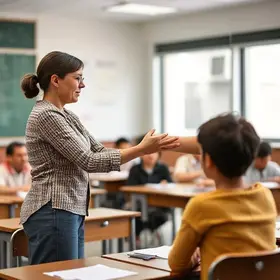
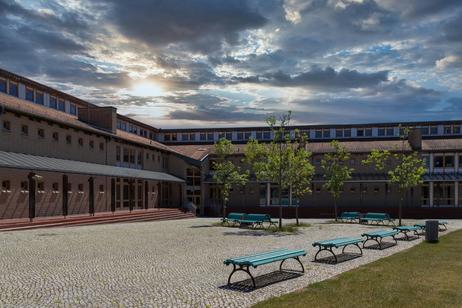
For boarding school students, and many teachers, the campus is home. Explore dormitory living, get expert advice on learning and living away from home and learn more about what can be done to help your child transition to and succeed in boarding school. Find resources for parents, teachers and students. We’ll cover sustainability, boarding school jargon, and corporal punishment. Read first-hand accounts from parents of boarding school students, find graduation gift ideas, and learn why small classes are effective.

View the most popular articles in School Life:

Boarding Life for Student Athletes in 2026

Updated
|
Boarding Life for Student Athletes in 2026
Explore how boarding schools help student athletes balance academics and competitive sports in 2026 with structure, support, and recruiting guidance.

Boarding Life for Student Athletes: Balancing Academics and Competitive Sports

For families considering a boarding school education, athletics often plays a central role in the decision-making process. Competitive sports can open doors to college admissions, scholarships, leadership development, and lifelong discipline. At the same time, parents want reassurance that academics remain the top priority.

In 2026, boarding schools across the country have refined their approach to supporting high-performing athletes while safeguarding rigorous academic standards. The result is a model uniquely suited to student athletes who aspire to compete at elite levels without compromising intellectual growth.

This article explores how Boarding Life for Student Athletes: Balancing Academics and Competitive Sports works in practice, what distinguishes boarding schools from day schools, and how families can determine whether this pathway is the right fit.

The Unique Advantage of the Boarding School Structure

Boarding schools are intentionally structured environments. Unlike day schools, where students commute home and juggle outside commitments, boarding schools integrate academics, athletics, residential life, and advising into a cohesive system.

A typical weekday for a boarding student athlete may look like this:

  • 8:00 a.m. to 3:00 p.m.: Classes

  • 3:30 p.m. to 5:30 p.m.: Practice or competition

  • 6:00 p.m.: Dinner with peers and faculty

  • 7:00 p.m. to 9:00 p.m.: Supervised study hall

  • Evening: Dorm meetings, team check-ins, or

. . .read more

Famous Boarding School Alumni & Parent Lessons

Updated
|
Famous Boarding School Alumni & Parent Lessons
Discover what famous boarding school alumni teach parents about leadership, resilience, and opportunity in 2026.

Famous Boarding School Alumni and What They Teach Parents in 2026

When parents research boarding schools, they often ask a practical question: What kind of outcomes can this education produce? One way to answer that question is to examine famous boarding school alumni. While celebrity success is never guaranteed, alumni stories provide insight into the long-term value of structure, independence, mentorship, and academic rigor.

From U.S. presidents to Academy Award winners and technology innovators, boarding school graduates often credit their formative years for shaping resilience and leadership. In 2026, as families weigh educational choices in a rapidly evolving world, these examples offer timely lessons.

Below, we examine notable alumni from leading boarding schools and explore what their journeys can teach parents today.

Leadership and Public Service: Character Before Credentials

Among the most frequently cited famous boarding school alumni are U.S. presidents.

  • John F. Kennedy, who attended Choate Rosemary Hall

  • Franklin D. Roosevelt, who attended Groton School

  • George H. W. Bush, who attended Phillips Academy

These leaders came of age in structured academic communities that emphasized public speaking, debate, service, and responsibility. Boarding schools historically prioritized honor codes and student leadership, experiences that prepared students for civic life.

According to the National Association of Independent Schools, independent schools continue to emphasize character education and ethical leadership alongside academic excellence. In 2026, this focus

. . .read more

Boarding Schools Leading in Climate Education 2026

Updated
|
Boarding Schools Leading in Climate Education 2026
Discover boarding schools leading in climate and environmental education, featuring 2026 sustainability initiatives and green campus innovation.

Boarding Schools Leading in Climate & Environmental Education

Climate change is no longer a distant concept discussed only in science textbooks. It is a defining global issue shaping higher education, career pathways, and civic responsibility. As a result, boarding schools leading in climate and environmental education are redefining what a 21st century curriculum looks like.

In 2026, environmental literacy has evolved beyond elective coursework. The strongest programs now integrate climate science, sustainability practices, campus infrastructure, and community engagement into a unified educational model. For families seeking schools that align academic rigor with environmental responsibility, these institutions stand out.

Why Climate Education Matters in Boarding Schools

Boarding schools are uniquely positioned to lead in environmental education because students live on campus. Sustainability becomes more than theory. It becomes daily practice.

Students see renewable energy systems powering their dormitories. They participate in campus composting. They measure carbon footprints in math class. They conduct watershed studies on nearby land. Living laboratories create continuous, immersive learning.

National trends support this shift. The National Association of Independent Schools has highlighted sustainability and environmental responsibility as priority areas for innovation in independent education. Colleges are also expanding environmental studies programs, renewable energy research, and climate policy initiatives, reinforcing the importance of strong preparation at the secondary level.

For parents researching schools, environmental leadership increasingly joins academic strength and college placement as a key consideration. Families who are already exploring resources such as How to

. . .read more

How Boarding Schools Are Adapting Post-Pandemic

Updated
|
How Boarding Schools Are Adapting Post-Pandemic
Explore how boarding schools are adapting to post-pandemic education in 2026 through wellness, hybrid learning, and global innovation.

How Boarding Schools Are Adapting to Post-Pandemic Education

The conversation around How Boarding Schools Are Adapting to Post-Pandemic Education has shifted from crisis response to long-term transformation. In 2026, boarding schools are no longer reacting to disruption. They are building durable, future-ready models that integrate health security, academic flexibility, student wellness, and global connectivity.

For families considering boarding education, understanding How Boarding Schools Are Adapting to Post-Pandemic Education is essential. The changes implemented over the past several years have reshaped campus life, academic programming, and institutional strategy in ways that will likely define independent education for the next decade.

Below, we examine how boarding schools are adapting to post-pandemic education and what these changes mean for students, parents, and educators.

Health Infrastructure Is Now Permanent, Not Temporary

One of the most visible aspects of How Boarding Schools Are Adapting to Post-Pandemic Education is the integration of permanent health infrastructure.

During the height of COVID-19, boarding schools relied on guidance from theCenters for Disease Control and Prevention and the World Health Organization to design testing, quarantine, and mitigation strategies. In 2026, those temporary measures have evolved into comprehensive health and safety systems.

Today’s boarding campuses commonly include:

  • Expanded campus health centers with upgraded ventilation systems

  • On-site rapid testing capabilities

  • Isolation housing that can be activated when needed

. . .read more

Boarding Schools Leading in Climate & Environmental Education Update

Updated
|
Boarding Schools Leading in Climate & Environmental Education Update
Discover boarding schools leading in climate and environmental education through sustainability, green campuses, and climate-forward curricula.

Boarding Schools Leading in Climate & Environmental Education

Climate change and environmental sustainability have moved from peripheral topics to core priorities in education. For many families considering boarding school, a school’s commitment to environmental education is no longer a bonus, it is a deciding factor. In 2026, leading boarding schools are responding with ambitious climate curricula, carbon reduction strategies, and campus-wide sustainability initiatives that extend well beyond recycling programs.

These schools are preparing students not only to understand climate science, but also to lead responsibly in a world shaped by environmental challenges. From carbon-neutral campuses to climate justice coursework, boarding schools are uniquely positioned to model environmental stewardship while integrating it into daily residential life.

This updated overview highlights how boarding schools are leading in climate and environmental education, with recent initiatives, expert perspectives, and practical examples for families evaluating schools with strong sustainability values.

Why Boarding Schools Are Well Positioned for Climate Leadership

Boarding schools function as small, self-contained communities. Students live, learn, eat, and participate in activities on campus, making sustainability practices highly visible and immediately impactful.

Key advantages include:

• Centralized energy, food, and waste systems that can be redesigned sustainably
• Residential life that reinforces daily environmental habits
• Flexible curricula that support interdisciplinary climate education
• Long-term campus planning aligned with environmental goals

Unlike day schools, boarding schools can integrate climate education into both academics and daily living, creating a culture where sustainability is practiced, not just

. . .read more

Recent Articles

Famous Boarding School Alumni & Parent Lessons
Discover what famous boarding school alumni teach parents about leadership, resilience, and opportunity in 2026.
Boarding Life for Student Athletes in 2026
Explore how boarding schools help student athletes balance academics and competitive sports in 2026 with structure, support, and recruiting guidance.
Supporting First-Generation Students in Boarding Schools
A 2026 guide to supporting first-generation students in boarding schools, with strategies for access, retention, and family engagement.

Featured Schools

Featured Schools

School Life

FOR PARENTS
This section covers issues and concerns for parents of boarding school students. Explore corporal punishment, get expert advice on preventing hazing, and read first-hand accounts from parents. Learn what to do if things go wrong, see what boarding school students do in the summer, and get words of wisdom from a reluctant parent.
FOR STUDENTS
Here you’ll gain knowledge about student life at boarding school. User our glossary of terms to learn boarding school jargon, discover the importance of a partnership between school, parent and child, and find great gift ideas for the boarding school graduate.
FOR TEACHERS
The articles in this section are related to teaching at a boarding school. Learn more about what is being taught, why small class sizes work, and the impact of sustainability on boarding schools. You’ll find a list of eBooks about boarding schools, be able to view pictures of boarding school life, and explore course offerings.