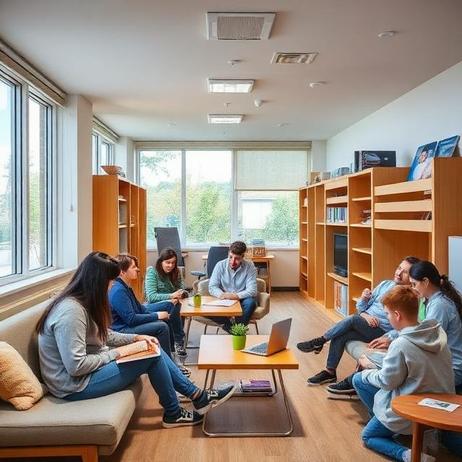
For many families considering a boarding school, dorm life is one of the biggest unknowns. Academics often drive the school search, but the residential experience shapes a student's daily life just as much. Dormitories are where students build friendships, learn independence, manage responsibilities, and develop the social skills that prepare them for college and adulthood.
In 2026, dorm life at boarding schools looks different from the stereotypes many parents remember. Modern residential programs place greater emphasis on student wellness, mentorship, safety, community building, and healthy independence. Faculty members often live alongside students, counseling services are more accessible, and residential programs are increasingly designed around whole-student development.
Understanding what daily dorm life actually looks like can help families determine whether boarding school is the right fit.
What Is Dorm Life Like at a Boarding School?
Dormitories serve as much more than student housing. They function as residential learning communities where students live, study, socialize, and grow together.
Most boarding schools organize students into residence halls, houses, or smaller residential communities supervised by faculty members known as dorm parents, houseparents, or residential advisors. These adults help maintain structure while providing guidance and support outside the classroom.
As discussed in Boarding School Review's guide toBoarding School Residential Life Models Explained, schools vary significantly in how they structure residential life, from traditional dormitories to family-style house systems.
Typical Dorm Features
Most boarding school dorms include:
- Shared student rooms or doubles
- Common lounges and study spaces
- Laundry facilities
- Faculty apartments within the dorm
- Kitchens or snack areas
- Wi-Fi and technology access
- Structured quiet hours
While luxury varies from school to school, the emphasis is generally on community rather than privacy.
Roommates and Shared Living
One of the most significant parts of dorm life at boarding schools is learning to live with a roommate.
Most schools carefully match roommates using questionnaires that consider habits, interests, schedules, and personality traits. The goal is not necessarily to create lifelong friendships but to establish a healthy living environment.
According to Boarding School Review's recent article onRoommate Matching at Boarding Schools, schools increasingly focus on compatibility, communication styles, and residential balance when making assignments.
What Students Learn From Roommate Relationships
Living with a roommate often teaches:
- Communication skills
- Conflict resolution
- Respect for shared space
- Flexibility and compromise
- Personal responsibility
Many students report that some of their strongest friendships began through dorm life.
Student reviews on Boarding School Review frequently highlight the importance of roommate experiences. At schools such as Deerfield Academy, Phillips Exeter Academy, and The Thacher School, students often describe dorm relationships as one of the most memorable parts of their boarding experience.
A Typical Day in the Dorm
Although schedules vary by school, most boarding students follow a structured routine.
| Time | Typical Activity |
|---|---|
| 7:00 AM | Wake up and breakfast |
| 8:00 AM - 3:00 PM | Classes |
| 3:00 PM - 6:00 PM | Athletics and activities |
| 6:00 PM | Dinner |
| 7:00 PM - 9:00 PM | Study hall or homework |
| 9:00 PM - 10:30 PM | Social time and dorm activities |
| 10:00 PM - 11:00 PM | Check-in and lights out |
Students often describe the structure as one of the biggest adjustments during their first few months on campus.
Families interested in the daily rhythm of residential education may also find useful insights inA Day in the Life of a Boarding School Student.
The Role of Dorm Parents and Residential Staff
A common misconception is that students are largely unsupervised after classes end. In reality, most boarding schools maintain extensive residential staffing.
Faculty members typically live within student residences and serve multiple roles:
- Dorm supervisors
- Mentors
- Academic advisors
- Coaches
- Community leaders
This level of adult accessibility is one reason many families choose boarding schools. Students often have more direct interaction with faculty outside class than they would in a traditional day school setting.
The National Association of Independent Schools (NAIS) notes that strong residential communities contribute significantly to student development and engagement throughout secondary education.www.nais.org
Student Leadership in the Dorm
Many boarding schools intentionally create leadership opportunities within residential life.
Upperclassmen often serve as:
- Prefects
- Proctors
- Dorm leaders
- Peer mentors
- Orientation leaders
These positions help younger students adjust while providing older students with meaningful leadership experience.
Recent trends show that schools are expanding peer mentorship programs as part of broader student leadership initiatives. Boarding School Review's article onBoarding School Student Leadership in Residential Life explores how residential communities increasingly serve as leadership training grounds.
Homesickness and Emotional Adjustment
Even students who are excited about boarding school often experience homesickness.
This is especially common during the first several weeks of school. The transition involves adjusting to:
- New routines
- New friendships
- Academic expectations
- Independence from family
Most schools now provide more comprehensive support systems than in previous decades.
Support Systems Available in 2026
Many boarding schools now offer:
- Licensed counselors
- Wellness centers
- Peer support groups
- Faculty advisors
- Regular parent communication systems
- Structured transition programs
The first month can be challenging, but most students gradually settle into routines and develop a sense of belonging.
The articleThe First 30 Days at Boarding School provides a realistic week-by-week overview of this adjustment process.
Dorm Safety and Student Wellness
Safety remains one of the top concerns for prospective boarding school families.
Modern residential programs have evolved considerably, with schools implementing both physical security measures and student wellness initiatives.
Common residential safety features include:
- Controlled dorm access
- Overnight faculty supervision
- Visitor policies
- Emergency response protocols
- Health centers
- Mental health resources
According to the U.S. Department of Education, student well-being and supportive learning environments remain essential components of educational success.www.ed.gov
Many schools have also expanded mental health programming since the pandemic, integrating wellness education directly into residential life.
Boarding School Review's recent coverage ofBoarding School Safety in 2025: Health, Cyber & Campus Life highlights how schools continue to strengthen residential safety standards.
Technology Rules Inside Dorms
Technology policies have become one of the most noticeable changes in boarding school life.
In 2026, many schools balance digital access with healthy screen-use expectations.
Common policies include:
- Wi-Fi monitoring
- Device-free study periods
- Smartphone restrictions for younger students
- Digital wellness programs
- Cybersecurity education
Many residential leaders now view digital wellness as a core part of student development, similar to physical health and time management.
The American Academy of Pediatrics continues to emphasize balanced technology use and healthy sleep habits for adolescents.www.aap.org
What Students Gain From Dorm Life
While living away from home can be challenging, dorm life often accelerates personal growth.
Students frequently develop:
Independence
Students learn to manage schedules, assignments, laundry, and daily responsibilities.
Time Management
Balancing academics, athletics, social life, and residential commitments requires organization and self-discipline.
Social Skills
Living in close community teaches communication, empathy, and cooperation.
College Readiness
Many boarding school graduates report feeling better prepared for college housing and independent living than their peers.
Research from the Association of Boarding Schools (TABS) consistently shows that boarding school graduates report high levels of preparedness for college-level independence and self-management.
New Dorm Life Trends in 2026
Residential life continues to evolve as schools respond to changing student needs.
Several trends are shaping dorm life at boarding schools today:
- Expanded mental health services
- Increased diversity and inclusion programming
- Wellness-focused residential education
- Greater emphasis on life skills training
- Enhanced technology and cybersecurity policies
- More structured peer mentorship programs
- Flexible residential models designed around student support
These changes reflect a broader shift toward whole-student development rather than simply providing housing.
As explored in Boarding School Review's article onWhat Boarding School Is Like in 2026, residential programs are becoming increasingly sophisticated and student-centered.
Frequently Asked Questions
Are boarding school dorms supervised?
Yes. Most schools have faculty members or residential staff living in dormitories and available around the clock.
Do students usually have roommates?
Most younger students share rooms, while upperclassmen may have single rooms depending on school policies and available space.
How do schools handle homesickness?
Schools typically provide faculty advisors, counselors, wellness resources, and structured orientation programs to support students during transitions.
Can students use phones in the dorm?
Policies vary by school. Many schools allow devices but impose guidelines around study hours, sleep, and digital wellness.
Is dorm life good preparation for college?
Many educators consider residential living one of the strongest aspects of boarding school preparation because students learn independence, responsibility, and self-advacy before college.
Conclusion
Dorm life at boarding schools is about far more than where students sleep. It is a structured residential experience that teaches independence, responsibility, communication, and resilience. While the transition can present challenges, today's boarding schools offer stronger support systems, more comprehensive wellness resources, and increasingly thoughtful residential programs than ever before.
For families evaluating boarding school options in 2026, understanding dorm life is essential. The right residential environment can provide not only a place to live but also a powerful foundation for personal growth, lifelong friendships, and future success.