Updated
|
How Boarding Schools Prepare Students for Global Careers
Discover how boarding schools today equip students with the academic skills, global mindset and career readiness necessary for international success.

How Boarding Schools Prepare Students for Global Careers

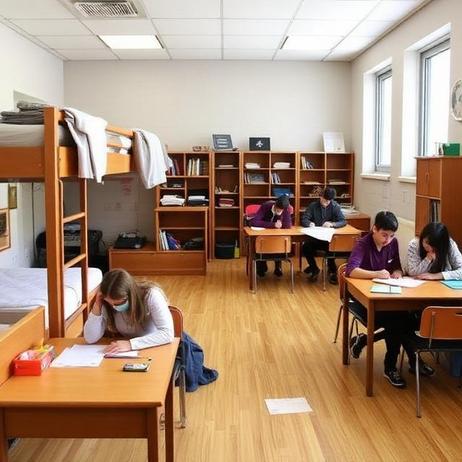
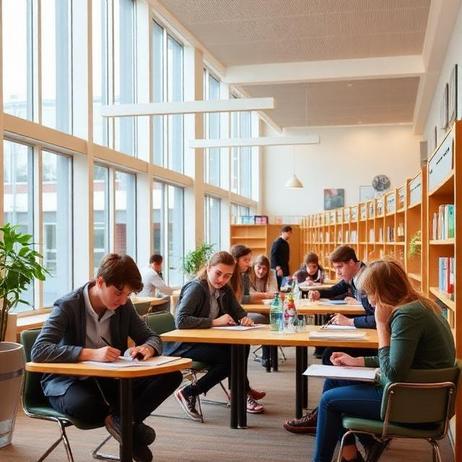
In today’s interconnected world, preparing students for global careers goes beyond traditional academics. Boarding schools are uniquely positioned to equip young people with the mindset, the networks and the experiences that enable success on a global stage. This article explores how boarding schools build global-career readiness, with current-year examples and expert commentary.

The Global Career Imperative

The careers of the future increasingly demand cross-cultural competence, adaptability and lifelong learning. Students need more than subject knowledge; they need confidence in diverse settings, networks across borders and a readiness to navigate complex workplaces worldwide. Boarding schools are stepping up to this challenge.

What Makes Boarding Schools Different?

Boards of education, parents and students often identify several advantages in boarding-school settings:

  • Residential communities foster independence, self-management and maturity.

  • Small classes and 24/7 supervision provide tailored academic and personal support.

  • A diverse student body from multiple countries creates a living global ecosystem.
    For instance, a recent review noted that 78 % of boarding-school graduates felt well prepared for the non-academic aspects of university life — far more than students at public schools.
    Similarly, boarding schools are described as cultivating “well-rounded generations for global success” thanks to extracurricular breadth and international exposure.

Core Elements of Global-Career Preparation

Here are the key ways boarding schools prepare students for global careers:

1. Academic Excellence

. . .read more

Financing a Boarding School Education in 2025

Updated
|
Explore tuition trends, financial-aid strategies and payment options for boarding school families in 2025—making affordable access real.

Financing a Boarding School Education (2025 Update)

Sending a child to a boarding school remains one of the most significant educational investments a family can make. In 2025, as tuition continues to climb and financial-aid models evolve, families must approach the process with strategy, transparency and foresight. This article updates key trends, policies and payment options for boarding school financing — and builds on our guide at BoardingSchoolReview.com to support parents, students and educators.

1. Understanding the Cost Landscape

For 2025, the sticker price of a boarding school is higher than ever. According to recent data from Boarding School Review, the typical range for full boarding tuition is $60,000 to $80,000 per year. Five-day boarding options average around $55,000, while seven-day boarding approaches $69,000.

For example:

  • St. George’s School lists boarding tuition at $77,950 for 2025-26.

  • Blue Ridge School lists seven-day boarding at $68,850 and five-day at $57,500 for 2025-26.

When assessing cost, families should remember: tuition is only part of the equation. Add-ons such as room, board, health services, technology fees, travel and co-curricular activities often add $5,000-$15,000 or more annually.

2. Why Tuition Keeps Rising

Several forces drive the rise in boarding school costs:

  • Staffing and faculty compensation: Boarding schools increasingly maintain low student-to-teacher ratios (often 6:1 or 7:1) and hire boarding-life professionals.

. . .read more

Boarding Schools & Phone/Social Media Policies 2025–26

Updated
|
Boarding Schools & Phone/Social Media Policies 2025–26
Explore how boarding schools are updating cellphone and social media rules in 2025–26, with tuition, trends, and expert insight for parents and educators.

Boarding Schools & Cell Phone / Social Media Policies: What’s Changing in 2025-26

As residential educational institutions enter the 2025-26 academic year, many boarding schools are rethinking the role of mobile devices and social media in student life. The unique environment of the boarding school means that cellphone and social media policies must reach far beyond classroom hours; they play a role in dormitory life, free time, weekends and students’ well-being. This article examines how these policies are evolving, what’s driving the change, and what parents, students and educators should know.

Why the Shift Now?

Several factors are driving boarding schools to revisit their mobile device and social media guidelines:

  • Mental health-and-wellbeing concerns. Growing research links high screen time and social media use to increased anxiety, depression, distraction and diminished sleep among adolescents.

  • Academic focus in a residential setting. Since boarding schools house students 24/7, not just during instruction hours, the question of when phones and social media are permitted becomes more complex: meals, dorms, weekends all count. For example, a policy states: “Community members are not permitted to use cell phones during the academic day in active and intentional learning and community environments (e.g., dining hall, chapel).”

  • Regulatory and cultural pressures. Certain U.S. states are now enacting “bell-to-bell” cellphone bans during instruction time, signaling broader shifts. Education Week

  • Parental expectations

. . .read more

Corporal Punishment in U.S. Boarding Schools: 2025 Update

Updated
|
Corporal Punishment in U.S. Boarding Schools: 2025 Update
A current look at the use of corporal punishment in U.S. boarding schools, legal status, research findings and what parents should watch for in 2025.

Corporal Punishment in U.S. Boarding Schools: 2025 Update

Every parent, student and educator considering a boarding school needs to understand how discipline is applied and legally regulated. While much attention focuses on day schools, boarding schools must also navigate discipline practices—including the controversial use of physical punishment. This article explores the current status of corporal punishment in U.S. schools (including private and boarding settings), touches on boarding-school specific issues, updates the 2025 policy landscape, presents new research, and offers insights for families evaluating boarding school environments.

What we mean by “corporal punishment”

In the context of K-12 schools, corporal punishment is defined as any physical force exerted on a student by school personnel intended to correct behaviour—traditionally paddling, spanking, or striking with an object. Historically, this has been applied in both public and private schools in certain states. While most schools today rely on suspension, expulsion, restorative practices or behaviour contracts, corporal punishment remains legal in some jurisdictions.

For boarding schools—where students live on site and are under supervision 24/7—the discipline environment can differ from day schools and requires particular scrutiny. The boarding context raises questions about oversight, residential rules, staff training and the overall culture of discipline.

Legal and policy landscape in 2025

As of 2025, the legal status of corporal punishment varies significantly by state. According to the National Education Association (NEA), 17 states currently permit corporal punishment in public schools, and additional states have not explicitly

. . .read more

A Day in the Life of a Boarding School Student

Updated
|
A Day in the Life of a Boarding School Student
Explore a realistic boarding school day in 2025—from morning wake-up to lights-out—offering expert insights for students and parents.

Boarding School Life: A Day in the Life of a Student Introduction

For many families considering residential education, understanding what a typical day looks like at a boarding school is a key decision factor. In 2025, boarding school life continues to offer a structured environment where academics, co-curriculars, social development, and residential routines blend in daily rhythm. This article walks through a representative “day in the life” of a boarding student, highlights current trends, offers expert commentary, and provides practical insights for parents, students and educators.

Morning: Wake-up and Academics

A boarding school student typically begins the day early. At many schools the routine starts around 7:00 a.m., when boarders rise, prepare for the day, and head to breakfast. For instance, one source notes breakfast in a communal dining hall followed by classes beginning around 8:30 a.m. or 9:00 a.m. in boarding-school settings. BoardingSchools.com

Typical morning schedule

Time Activity
7:00–7:30 Wake up, morning hygiene, dorm check-in
7:30–8:15 Breakfast with peers and faculty
8:15–9:00 Preparatory time, review assignments
9:00–12:00 Core academic classes

During morning classes, boarding students are immersed in a college-preparatory curriculum—courses such as Algebra II, English literature, global studies or world languages. One school profile describes a morning class then a study hall right away, allowing students to ask questions and stay ahead. Salem Academy

Midday: Lunch, Free Block, Activities

By midday, the schedule transitions to lunch and a mix of academic support or co-curriculars. Lunch has both a nutritional

. . .read more

Recent Articles

Famous Boarding School Alumni & Parent Lessons
Discover what famous boarding school alumni teach parents about leadership, resilience, and opportunity in 2026.
Boarding Life for Student Athletes in 2026
Explore how boarding schools help student athletes balance academics and competitive sports in 2026 with structure, support, and recruiting guidance.
Supporting First-Generation Students in Boarding Schools
A 2026 guide to supporting first-generation students in boarding schools, with strategies for access, retention, and family engagement.